
In 1890, Woodrow Wilson, president of Princeton and eventually President of the United States, observed that “Princeton is noted in this wide world for three things: football, baseball, and collegiate instruction.”
The year Wilson made that statement, Princeton University went 11-1 in college football. Among those games was a 115-0 victory over the University of Virginia. Princeton’s lone loss came to Yale, which beat Princeton 32-0 in the final game of the season. That game was the start of a 37-game winning streak for Yale. Within that streak was a rematch with Princeton in 1891. Before more than 40,000 fans at the Polo Grounds in New York, Yale prevailed again 19-0. At this point it was clear that college football was a thriving business. In 1891 alone, Yale earned nearly $20,000 in revenue from its football team. In a nation where average incomes were less than $300, this was quite a bit of money.
Because college football was a business, one might expect it would be subject to the laws governing business in America. One of the most important of these is the Sherman Antitrust Act. Passed the same year Wilson was bragging about Princeton football, the Act makes it clear that conspiracies in restraint of trade are very much illegal.
Despite a law that clearly prohibits restraints of trade, the business of college sports has from the beginning engaged in a conspiracy to restrain the ability of its certain of its employees (the players) to sell their labor in a free market.
For those unfamiliar with the term, a monopsonist is a dominant buyer in a market with many sellers. College sports have thousands of athletes. Hence there are many sellers. But the NCAA is the dominant buyer in this labor market. As the NCAA states in its own advertisements and on its own website, “98% of the 550,000 NCAA student-athletes will go pro in something other than sports.”
Yes, a small number of college athletes do become professionals in leagues like the WNBA, NBA, and the NFL. But the NCAA admits that for 539,000 college athletes (98 percent of 550,000), the NCAA is the only employer they will ever work for in sports.
The NCAA has argued consistently in court cases that it is not a monopsonist and it is not violating the Sherman Act. At the same time, the NCAA has lobbied Congress to give it immunity to the antitrust laws, so that schools can coordinate on pay to college athletes. The NCAA argues such coordination is necessary because college sports are, in the words of Senator Ted Cruz, in “chaos,” and something has to be done to save college sports. Recently, 76 Senators in addition to Senator Cruz fell for this story by passing the Protect College Sports Act. The reality of college sports is quite different, however, from the stories the NCAA has been telling Congress and the media.
Here are six economic facts that reveal just how badly 77 U.S. Senators were fooled by NCAA lobbyists.
1. The NCAA is a monopsonist that has consistently exploited its workers for more than a century
Economic exploitation exists when a worker is paid a wage that is less than the revenue the worker generates for the firm. Published academic studies have indicated that athletes in college football, men’s college basketball, women’s college basketball, softball, and women’s gymnastics have most definitely been exploited. The current legislation does allow universities to pay more to athletes than the cost of attendance. But that pay is going to be capped and there is no mechanism that allows athlete compensation to rise as revenues inevitably rise. Again, the NCAA exploited its employees for more than a century. If players cannot negotiate the size of the cap, that exploitation will most definitely continue in the 21st century. And that means, a vote to exempt the NCAA from the Sherman Act is simply a vote to ensure the NCAA continues to exploit thousands of college athletes.
2. College sports is a thriving business
Proponents of the Protect College Sports Act like Senator Cruz claim college sports are in chaos. Yet the NCAA also argues that revenues for college sports continue to grow. In a 2026 Sports Business Journal article, Ben Portnoy wrote that the NCAA itself had indicated that NCAA revenue had grown $300 million since Charlie Baker became NCAA president in 2022. This revenue increase has happened in the “chaotic” world of NIL payments.
3. Non-profits do not earn profit
The NCAA has historically argued that we shouldn’t focus on revenues, but instead on profits. According to the NCAA, most college sports teams are not profitable. This is an immensely silly argument. College sports exist within an institution (college and universities) that are non-profits. Non-profits do not make a profit. Yes, this should be immensely obvious. Surprisingly, when the NCAA says college sports are “not profitable,” we don’t have enough people screaming: “Of course they are not profitable. You are a non-profit. There is no profit in a non-profit. It’s right there in the f—king name!”
4. College sports spend too much money on coaches and facilities
Non-profits will spend all their revenue. In fact, if the institution allows them to, college sports—just like any other academic department—will spend as much money as the institution allows. In college sports, that spending has generally been on the employees who people are not paying money to see. Instead, the money has been spent on lavish facilities and salaries for coaches.
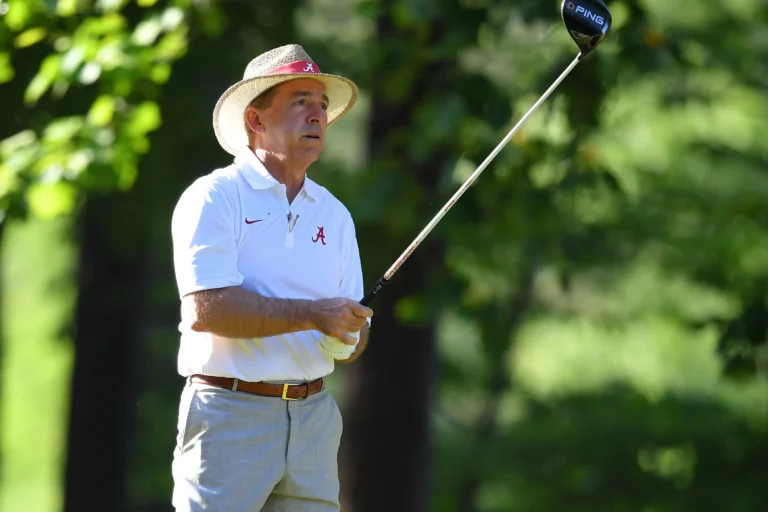
Perhaps the clearest example of the latter is the University of Alabama in 2007 agreeing to pay Nick Saban a salary similar to what he was being paid by the Miami Dolphins. An NFL team earns immensely more revenue than the richest college football teams. Back in 2007, the Dolphins had four to five times the revenue of the University of Alabama. But because Alabama didn’t have to pay the employees who actually played football (beyond the cost of attendance), they could offer Saban very similar money. Congress has shown no interest in capping the pay of college coaches. They won’t even cap the pay of college coaches who are no longer coaching college football. And that amount can be substantial. By week ten of the 2025 football season, colleges had already agreed to pay $185 million to fired coaches who were not employed anymore. Once again, college departments will spend any money you let them spend. And in college football, spending $185 million on fired coaches is approved while people get quite upset about money spent on the employees on the field.
5. Restricting wages is not necessary to create competitive balance
The NCAA argues it must restrict wages to its playing talent to maintain competitive balance. It argues that unrestricted spending will allow the richest schools to dominate college sports. Anyone who has ever looked at the history of college sports would have a hard time believing this story. There are currently more than 360 schools that participate in Division I men’s college basketball. Since 1939, the men’s basketball season has concluded with the NCAA tournament. After the 2026 season, there have been 87 tournaments and therefore 348 Final Four teams. Given the NCAA’s persistent emphasis on competitive balance, one might expect many of the more than 360 schools participating in Division-I men’s college basketball to have appeared in the Final Four at some point in their history. But across these 87 seasons, 268 Division I schools have never had a Final Four appearance. Thus, 73 percent of the schools in Division I men’s college basketball never appeared at a Final Four.
We see the same pattern in college football. The NCAA reports champions in college football back to 1869. Across more than 150 years of history, there have been 27 schools that have won (or shared) three or more of these titles. These 27 schools have won 88 percent of these titles. As I detail in my sports economic textbook, one can see the same pattern in many other college sports.
6. College sports accounts for a modest share of university revenue
The Ohio State University is one of the biggest entities in college sports. In 2025, this school reported $8.5 billion in revenue for the institution. It also reported $336 million in revenue for college sports. If you do the simple math, this means college sports at Ohio State are less than four percent of the institution’s revenue. It is a similar story at most institutions. Yes, collectively college sports are a billion-dollar industry. But relative to the higher education industry—that is, the business in which universities and colleges actually participate—college sports is a very small business. One would think given the relatively small size of college sports, when it comes to universities, a collection of Senators would find more time to talk about non-sports matters.
But that is not what’s happening. At least, that’s not what’s happening for now. For more than a century, Congress decided to ignore the fact that the college sports business was violating the Sherman Act. Congress decided it was not a problem for an entire industry to conspire to exploit its workers. In 2021, the U.S. Supreme Court finally said this had to stop. As Justice Brett Kavanaugh said in NCAA v. Alston: “Nowhere else in America can businesses get away with agreeing not to pay their workers a fair market rate on the theory that their product is defined by not paying their workers a fair market rate.”
After this decision, the pay to college athletes started to rise. And suddenly, college sports is in chaos. Suddenly, competitive balance in college sports is threatened. Suddenly, Congress must intervene so this relatively small business can make sure it never has to pay its employees a “fair market rate” while allowing college coaches to continue to collect millions for not working. College sports is not in chaos. But if athletes continue to demand higher salaries, the pay of coaches and other administrators will eventually be threatened. In the end, the Protect College Sports Act is poorly named. An antitrust exemption for college sports allows the NCAA to protect the pay of the non-athletes employed in college sports. The Senate didn’t vote to protect college sports. What they voted for was a bill to make sure friends of Nick Saban keep getting paid.