
In our technology-drenched economy of the 21st century, many of today’s most pernicious price-fixers have swapped in-person conspiracies for the number-crunching power of algorithms or artificial intelligence, in areas as diverse as rental properties, health insurance, and agricultural commodities. RealPage, MultiPlan, and Agri Stats are the new faces of anticompetitive practices dressed up as digitally enabled information-sharing partnerships.
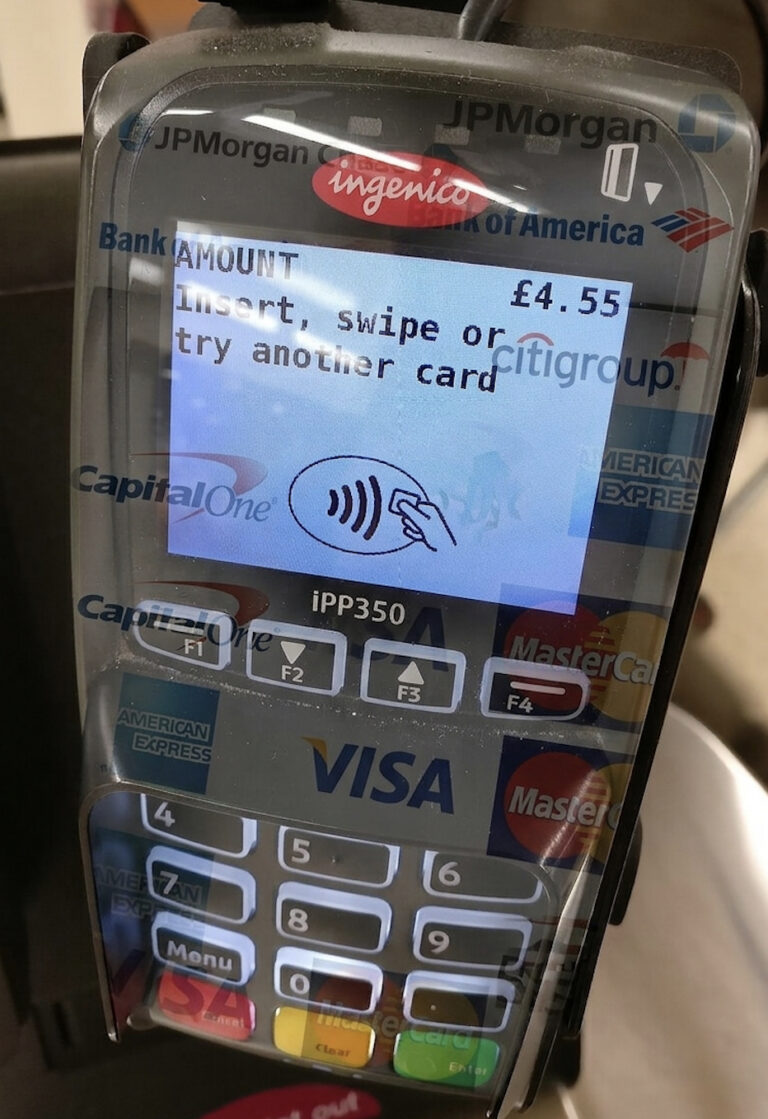
The newfound attention on these modern price fixers demands that we take a fresh look at an old-school cartel that operates in plain sight, because the American economy is still grappling with the original gangsters of electronic collusion. Visa and Mastercard, along with their partners in crime, the card-issuing banks, wrote the book on how to fleece your customers via tight cooperation. This cozy setup between the payment networks and the big banks that dominate the card business underpins a payment system that is, compared to the rest of the world, grossly inefficient and costly.
Merchants who accept payment cards coughed up nearly $200 billion in fees in 2025, almost twice what they paid since the pandemic, contributing to the affordability crisis for American consumers, as some or all of those fees gets passed through to customers in the form of higher prices for goods and services. Consumers now groan under the weight of $1.25 trillion in credit card debt, a large chunk of which is the interest big banks have larded on above and beyond the general rise in borrowing costs. By contrast, Visa, Mastercard, and the big banks responsible for 70 percent of credit card transactions—JPMorgan Chase, Bank of America, Citigroup, Capital One, and American Express—know only blowout profit margins.
The facts on RealPage, perhaps the most egregious of the new algorithmic price fixers, are damning. The software program, owned by private-equity software consolidator Thoma Bravo, corrals information from participating landlords (many of whom are horizontal competitors in the same geographic market) to maximize their joint profits, leading to higher rents. Information such as lease duration, renter income, and occupancy rates, all feed into an algorithm that adjusts lease terms and prods landlords to turn the screws on renters. This mathematical monstrosity is, in the words offormer Assistant Attorney General for Antitrust, Jonathan Kanter, “even more effective than the smoke-filled rooms of the past.”
Veni, Vidi, Visa
The system headed by Visa and Mastercard that includes the big banks looks more like a hybrid of past and present—a digital service with a network of contracts underneath and a pricing schedule—than a pure algorithmic conspiracy. But the effects scarcely differ. These payment players are not cooperating competitors in the sense of those landlords who are all in the same business. Networks and banks represent different parts of the payment system in which collusion raises costs for the merchants and consumers who rely on the system. Visa and Mastercard create the conditions under which thousands of financial institutions, like the RealPage landlord, can move in parallel without needing direct communication.
In broad brush, when a customer pays for a purchase with a card, the merchant pays Visa or Mastercard immediately, as the full “swipe fee” is deducted from the purchase price. The network in question slices off a portion of the money for its efforts and then forwards the bulk of the money to the bank that issued the card. Visa and Mastercard merchant-fee rates on credit cards increased from an average rate of 2.02 percent in 2010 to 2.36 percent in 2025 according to the Nilson Report. Multiplied across hundreds of billions in transactions, small fees lead to colossal revenues for the card cartel.
Just like a renter who can’t escape the pressure of RealPage when the bulk of landlords in the area use it, there is no meaningful pressure point for merchants or consumers to exert downward pressure on payment-card costs through the usual capitalist method of walking away from the purchase and taking business elsewhere. Everyone needs shelter and the reality of payment cards is the same. Merchants who care about sales can’t plausibly decline to use cards. Also, restrictive contracts with Visa and Mastercard prevent them from privileging cards with lower swipe fees; if they accept one card, they must accept them all.
Consumers use payment cards for 65 percent of payment transactions, and in some sectors like restaurants, that figure exceeds 80 percent. The nature of consumer credit also severely limits the consumer’s ability to shop around for the cheapest credit card. Banks typically market them using a range of interest rates; the final cost depends on an applicant’s credit score. In short, the market discipline we expect in other businesses—both at the merchant and consumer level—is weak to non-existent.
Soft Coordination, Hard Words
The smoke-filled room aspects of the payment card duopoly emerge when considering how swipe fees are set. Card networks do not publicly disclose a precise formula for how they set swipe fees, but the available evidence indicates that it consults extensively with banks issuing credit cards. The process is more structured than a unilateral executive decision by a CEO at Visa or Mastercard. But no one should mistake it for an arm’s length negotiation in which individual banks compete to set lower rates.
Also, Visa actively calibrates fees to shape behavior throughout the network. “Visa uses these fees to balance and grow the payment system for the benefit of all participants,” the company says on its website. Let’s ponder that single sentence, which contains more than a whiff of mafia-like coercion. Look Mr. Merchant, we take your money for your own protection and so that this neighborhood stays nice and peaceful. You know dat, right? Visa and Mastercard are not the first organizations to dress up their racket with niceties about valuable services provided.
To the benefit of all participants? Well, some. A Senate hearing in 2010 once stripped away the niceties to nail down the modus operandi. “We work very closely with our financial institution clients on a daily basis,” a Visa executive told the lawmakers. “We are in regular communication with the networks,” said a JPMorgan Chase official. Of course they are: these two entities share the bounty of swipe fees. When it comes to price, merchants and consumers communicate with the credit-card machine mainly via lawsuits, which offer no structural remedies.
Beneath these bland statements about cooperation lies a web of data exchange—and here the system starts to look a lot more like RealPage—that creates a high degree of transparency for Visa, Mastercard, and issuing banks, as to what the other players are doing. Visa and Mastercard have a bird’s-eye view of system-wide transaction patterns, and they share analytics with banks. Card issuers have their own repository of data about merchant acceptance of payment cards, and consumer use of the same. This combination of information and tight relationships reduces the uncertainty in pricing that underpins a competitive market, known in antitrust theory as a “soft coordination” problem.
Visa and Mastercard make OPEC look weak
If the system had evolved differently, surely some enterprising chap would have created a software suite—call it “RealCard”—in which banks contributed data like individual customers’ income, price sensitivity to new fees, and usage statistics to maximize what it costs people to move money. But Visa and Mastercard evolved out of associations of banksthat became independent companies early in the 2000s, so the structures for cooperation between the networks and the bank-issuers was already in place.
When it comes to swipe fees paid by merchants and ultimately consumers, the system is organized around schedules and rules established by the networks. They are entirely one-sided; networks and banks want to increase them. But smaller merchants have no power to negotiate them downward; they sit on the receiving end of an inexorable logic of monopoly power, much like the strapped tenant in a RealPage-driven rental market.
Solutions to the swipe-fee problem include market-based mechanisms and outright caps. The Credit Card Competition Act, a bipartisan piece of legislation now before Congress, would ensure that merchants would have the option of a third company, beyond Visa Mastercard, to route transactions. Having a competitor for every swipe would, in theory, force the fees down. In the case of debit transactions, Congress required a cap on swipe fees in the 2010 Durbin Amendment, but the Fed wrote a bank-friendly rule that greatly diluted its impact. In recognition of the network advantages that Visa and Mastercard have built, the European Union treats the credit-card duopoly almost like regulated utilities and has long capped all swipe fees at a very low rate.
Visa and Mastercard represent “one of the longest-running and most lucrative cartels in the history of the United States,” goes the recent lawsuit filed by the amusingly named Potayto-Potahto, LLC, a group of small restaurants. Modern coordination can emerge through platforms, algorithms, and network governance rather than through explicit agreements among competitors. And you have to admire the audacity of it all. Algorithmic price-setters like RealPage use data to shape conditions of competition and the bargaining power of customers. Even OPEC, scourge of the world’s energy consumers, stands or falls on the messy politics of negotiations among producers scattered across the globe. Visa and Mastercard—hey, they just set prices.
Carter Dougherty is Senior Fellow for Antimonopoly and Finance at Demand Progress. He also writes the occasional newsletter at The Money Trust.