
On the first of September, the Los Angeles Clippers of the National Basketball Association (NBA) received some devastating news. Steve Ballmer, the team’s billionaire owner, had been suspended for one year from all league functions for his role in the Kawhi Leonard affair.
What does this mean for the Clippers? According to the New York Times, a suspended owner faces the following restrictions: “… there is to be no attendance at games or practices—for their or any of the other 29 NBA teams. No appearances at the NBA All-Star Game or Emirates Cup, finals, draft or combine.” Indeed, suspended owners can’t even go into team offices or influence personnel or business decisions.
Or to put it simply, the Clippers are going to lose the benefit of Ballmer’s leadership. For an entire year! Again, this should be devastating. The New York Times noted that Ballmer is the richest owner in the NBA. He is one of the richest men in the world. To lose such a leader will obviously hurt.
Right?
This is a story we often hear. Business leaders are often glorified. A host of articles and books have been written celebrating various business leaders who have changed the world. Economists have actually argued that the fundamental factors of production are labor, capital, land, and entrepreneurs. Or to put this in simple words, production in the economy requires workers, machinery, land, and a person brilliant enough to put it all together. From this perspective, without the entrepreneur—or without the business leader—a business simply can’t succeed. As Investopedia says: “Entrepreneurship is the secret sauce that combines all the other factors of production into a product or service for the consumer market.”
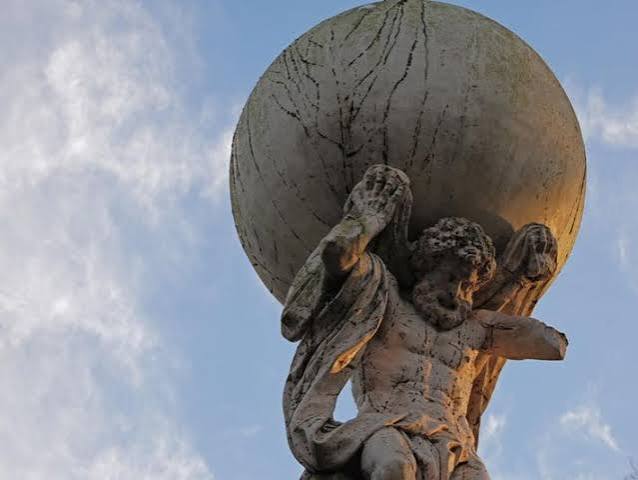
This is not just something economists imagine. Once upon a time, Ayn Rand wrote a story about the importance of that secret sauce. That story was Atlas Shrugged. Published in 1957, Rand’s book goes on for more than 1,000 pages. For those who are not interested in reading this much (and I have!), Daniel Kowalski summarized the story as follows:
The plot of Ayn Rand’s 1957 novel Atlas Shrugged can be briefly summed up as follows: the productive leaders and innovators of the country go on strike by disappearing from society to protest the cronyism, corruption, and oppressive taxes that have made living a virtuous life unbearable. The nation is then on the brink of an economic collapse as the remaining politicians, intellectuals, and mediocre businessmen are only able to take from others and have no capability to create or add value.
In Rand’s fable, when these leaders go on strike, society collapses. If this story reflected reality, the Clippers are clearly in trouble. Once again, it looks like Ballmer is one of the “best” business leaders in the world. We have to believe that losing that sort of talent has to cause the Clippers to collapse.
If you look for stories examining the Clippers’ prospects in 2026-27, though, none seem to mention Ballmer. Stories about the Clippers—and any other NBA team—generally focus on which players the team employs (or doesn’t employ). No one mentions the role the owner plays in a team’s fortunes.
This is not just a story about the Clippers or the NBA. Let’s think about the history of strikes and lockouts in sports. A strike happens when the players refuse to show up to play. A lockout happens when the owners refuse to allow the players to play. These are not really different events. Typically, a lockout is simply an effort by the owners to move the timing of an impending strike to a part of the season that minimizes the owner’s pain. A strike at the end of the season will cost the owners the playoffs. Players aren’t paid for the playoffs, so a strike at that point costs the players very little but harms the revenue streams of the owners. A lockout at the beginning of the season harms the players (i.e., takes away their pay) and possibly protects those valuable playoffs.
Whether it is a strike or a lockout, though, the story is the same. The players do not come to work and the entire sports league ceases operation. Without the workers, there simply is no business.
Rand told a story that the same should be true for the leaders of the business. If we take away the “secret sauce” of business leadership, the business also ceases to function. Rand went every further. In her story, taking way the “secret sauce” of business leaders causes society itself to cease functioning.
If this were true, then there is a simple bargaining strategy for owners in a labor dispute with players in sports. Consider the pending labor dispute in Major League Baseball. The owners in baseball want a salary cap. The players do not. The players have threatened to go on strike to make sure a salary cap is not implemented. The owners should reply: “If you do not accept a cap on your salaries—which we know is best for the game—the owners will go on strike. We will no longer lead you. Without our leadership, baseball will collapse and you will not have a job!”
Despite what we hear about the importance of business leaders, we have never heard an owner—inside or outside of sports—make such an argument. Yes, owners have threatened to withhold investment. But that is not the “secret sauce” of entrepreneurship. Banks and stock markets exist to connect the funds of savers to the financial needs of businesses. Everyone understands that land, labor, and capital requires financing. Again, that’s one of the primary functions of the financial industry.
Business leaders, though, don’t argue they are just another form of a bank. No one has ever written a book about how a great business leader did an amazing imitation of a bank. Books are written about the amazing “leadership” of these people.
If those stories were true, then business leaders should be able to threaten a strike. And the fact they never do this gives away the real game.
The comedian Bill Burr captured this point in a comedy bit about Steve Jobs. Burr points out that Steve Jobs was celebrated for changing the world we live in. Yet Burr questioned if Jobs really did this. After all, as Burr points out, Jobs didn’t create all the technology at Apple by himself. Burr explains that Jobs just told other people what to invent. And when the product came out, Jobs took all the credit.
This is essentially what happens every time a sports team wins a title and the owner lifts up the trophy. The players won the title. The owner celebrates as if they played a huge role in this outcome. We all know, however, that the owner really didn’t win anything. In sports, it is well understood that the players win the titles.
All of this tells us that maybe economists aren’t getting the factors of production quite right. A firm requires labor, capital (i.e. machinery), and land to produce a product. This has to be true. Whether or not they truly need a “brilliant” leader… well, Steve Ballmer isn’t going to show up for work for an entire year. Do we think the Clippers are going to notice?
And this is why owners in sports don’t threaten to strike. It would be truly embarrassing if the player called their bluff and no one noticed when the owners stayed home!