In the heart of Hollywood, Paramount Studios sprawls across a 65-acre campus, housing hundreds of thousands of square feet of offices, sound stages, sets, and a five-acre replica of the streets of New York City. Paramount directors and producers have filmed, soundtracked, and edited many thousands of films and television shows in its Los Angeles home for more than a century. The studio’s history and physical presence embody Hollywood.
The threat that Paramount might pull up stakes and leave the state altogether, far-fetched as it might be, became the boogeyman Paramount Chief Executive David Ellison used to scare California Governor Gavin Newsom and Attorney General (AG) Rob Bonta out of their effort to stop Ellison’s planned $111 billion takeover of rival movie studio Warner Bros. News reports described Ellison’s threat that he would move the studio to Nashville if the state continued prosecuting its antitrust lawsuit as “deadly serious.”
Paramount picking up its business and assets and leaving California has always been unlikely. As multiple former antitrust officials have pointed out, the financial impact of moving a business is something Paramount likely can’t absorb. Who’s going to work at Paramount Studios in Tennessee? Most of the entertainment industry’s top producers, directors, set designers, engineers, writers, gaffers, cameramen and actors live and work in Southern California. How would one uproot all that infrastructure, including the streetscapes? Although Nashville has a fledgling film industry, the prospect of moving all of that physical stuff and decoupling Paramount from its Hollywood home smacks of fiction — and desperation to end a legitimate challenge to a facially anticompetitive merger.
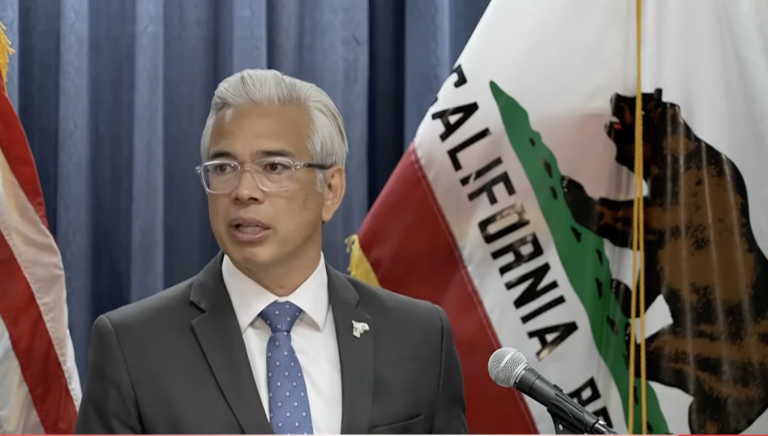
Yet that threat is what turned the tide against the state-led lawsuit to block the deal. Yesterday, Bonta and a group of 11 other state AGs backed away from their litigation and allowed the deal to close with minimal interference. Bonta’s choice to do so is disappointing, of course, bowing as they did to an empty corporate threat. But the choice also clouds a once-rosy picture of the role state antitrust plays in maintaining open markets and protecting workers, shoppers, and honest businesses from corporate wrongdoing.
Legally, the lawsuit to block the deal appeared to be on sound footing. Paramount’s purchase of Warner Bros. would have left only four major film distributors in America, accounting for around 85 percent of the industry. Prevailing Supreme Court precedent under its 1963 decision in Philadelphia National Bank says that’s beyond the level of concentration needed to support an antitrust challenge. An article in The Sling estimated the concentration index (known as HHI in antitrust parlance) for theatrical releases would increase from 1,594 to 1,938 post-merger, well beyond the threshold for challenging a merger under the current federal merger guidelines and creating a de facto duopoly in basic cable programming.
In other words, now that the deal has received a blessing from the state AGs, the merged company will wield an incredible amount of power in the entertainment industry. Cable distributors fear negotiating with a company that owns Discovery, TBS, TNT, CNN, HGTV, the Food Network, MTV, Nickelodeon, CBS, and scores of other networks. A single company controlling that much content can ratchet up what they charge cable companies–a cost the cable companies will certainly pass on to their subscribers. The merger would have a similar impact on the film industry. The combined company has the power to squeeze theaters for a heftier split of the revenues a movie makes, leading to even higher ticket prices for moviegoers.
The merger will also punish thousands of Hollywood and other entertainment industry workers. The Writers Guild of America sued to block the merger, accusing the deal of eliminating a major employer of writers and other Hollywood workers. As economists Rafay Abid and Devesh Ray explained, “If we take one bidder out of the game, then every remaining studio’s best response is to temper its bid.” Mergers often lead to job loss; around 30 percent of workers at merging companies are made redundant on average. A merger that eliminates competition for workers is just as harmful as a deal that eliminates competition for goods and services in the view of both the courts and the merger guidelines.
Despite this sound footing, and after describing behavioral remedies as “not particularly good at solving the problem,” Bonta agreed to a paltry (behavioral-remedy-laden) deal with the studios. The remedies in the lawsuit, on the surface, go some way towards addressing some harms of the merger. The studios, for example, must negotiate their rates with cable television distributors separately, rather than pooling their networks to gain bargaining power. They must maintain their current film rental rates they’ve negotiated with theaters. If the companies break those terms of the deal, they’ll be forced to sell off some of their film and television properties. The deal also protects the right of workers at the combined company to maintain union membership.
But that’s about it. The deal still exposes workers to layoffs and redundancies. The TV and film properties the companies would divest if they violate the consent agreement—the BET television network and the film studio Miramax—wouldn’t restore real competition to either the film or television markets. Most egregiously, the decree overall expires after five years, and the company would only have to maintain the rental rates it charges theaters for the first three of those years. What’s more, the remedies would go away entirely if the U.S. slips into a recession. The behavioral guardrails the decree puts in place will be gone in a flash. Then, nothing. Just the power of the combined Paramount and Warner Bros with nothing to stop it from using that power to raise prices.
And that’s not taking into account the more political goals of the merger, and the state lawsuit to stop it. Ellison is a close ally of the Trump administration, and he has already reshaped the news division at CBS. Ellison was in talks with the White House to dismiss some CNN hosts from the network if the administration would green-light the Paramount/Warner Bros deal. The Department of Justice did just that, so preserving CNN’s journalistic independence hung on the state’s lawsuit. In the settlement, Paramount did agree to establish an “Editorial Oversight Board” to oversee journalistic integrity at CNN. That board will be appointed by the company’s board of directors, of which Ellison is the chairman.
Bonta’s decision to allow the mega-merger to close bodes poorly for antitrust enforcement in California, and likely well beyond. As we’ve seen, state antitrust enforcement becomes the sole bulwark against harmful mergers and monopolies when the federal enforcers abandon that duty, as they have largely done under Trump. Although the states prevailed after the DOJ left the Live Nation monopolization case, the states lost their challenge to the AT&T-Time Warner merger, an indication that going solo can be risky. Moreover, enforcing antitrust law requires significant resources, which only a handful of big, wealthy states can marshal. California is one of them.
California’s willingness to prosecute an antitrust case to trial and beyond deters bad deals and behavior. If the federal agencies won’t step in and states with real resources like California hand out weak settlements, the current wave of anticompetitive mega-mergers will continue unabated.
The settlement is particularly problematic in California. For years, the California Law Revision Commission has been studying ways to improve the state’s antitrust law, the Cartwright Act. Much of the Commission’s work has focused on whether California needs a state-specific merger law that would allow it to stop anticompetitive dealmaking without relying on federal law and courts. The Commission is likely to recommend that the state legislature introduce and pass such a bill, but Bonta’s capitulation to Ellison and the Paramount/Warner Bros. deal casts doubt on the state’s willingness to properly enforce its own anti-merger law even if it were to pass. Plus, California Democrats accepted bad-faith, big business arguments and stripped the private right of action out of its pending monopolization bill, the COMPETE Act, suggesting the same fate may await a bill banning bad mergers. If workers and small businesses can’t enforce the law, and if the AG also won’t enforce it, what’s the point of having a law in the first place?
The settlement is a shame, and not just for the entertainment industry and the public, which will very likely face higher prices, lower wages, worse entertainment options, and even more politically compromised news media. Actors, directors, and a collection of industry and labor advocates pushed the state to fight the deal. State-level antitrust enforcement appeared to be exactly the antidote for a Trump Administration closely aligned with corporate power. Bonta’s choice to bless the Paramount/Warner Bros. deal casts some doubt on states’ willingness to ignore hollow corporate threats and fully embrace their statutory role as competition enforcers.
Ron Knox is a senior researcher and policy advocate for Institute for Local Self-Reliance’s Independent Business Initiative.