
When it comes to corporate lawbreaking, efforts to thwart attempts at monopolization are rarely successful. American businesses routinely abuse the legal system to sustain and enhance their dominance in public life. The countervailing seeds of antitrust revival have not fully bloomed to prevent the corporatist takeover perpetually weakening labor protections and other economic rights such as privacy or consumer protection. The growth in the overall size of the economy still outpaces resources available for our federal antitrust agencies; those resources are needed to punish dominant firms acting badly to shape markets, displace rivals, and concentrate both political and economic power.
To make matters worse, courts abet the race to the bottom. Through their commitment of hand selecting winners of a rigged economy, corporations have become politically super-enfranchised as a class. An ideologically conservative judiciary continues to demonstrate that widespread and preventative antitrust guardrails from the bench are unreliable as a means to curb naked exercises of power once extrajudicial lobbying pressure and corruption prevent reasonable contestation of predatory behavior. At the appellate level, antitrust violations are ignored even after prices are raised and competitors excluded.
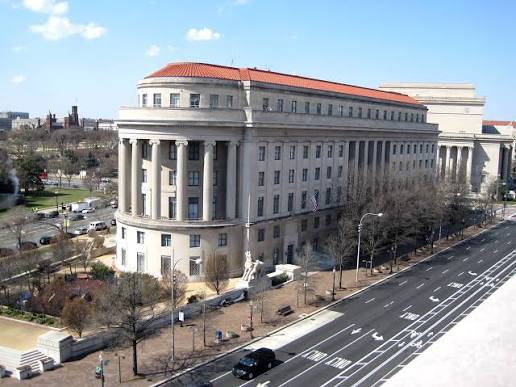
Because there are only two primary federal antitrust agencies tasked with holding wayward corporate goliaths accountable—the Federal Trade Commission (FTC) and the Antitrust Division of the Justice Department (DOJ)—preventable failures in adjudicating cases and policing harm arise when the funding for them is slashed under any austerity-centered administration willing to halt both investigations and enforcement actions while waiving through big mergers like Mars’ proposed acquisition of Kellanova.
In the financial sector, post-merger mega firms become accepted as too-big-to-fail or too-big-to-supervise for strapped agencies with limited reach. Community economic vitality suffers as a result without adequate oversight of market players, and antitrust agencies answering to Congress cannot effectively act as rule-enforcers responsible for maintaining compliance or disciplining lawbreakers. The urgent need to create the Consumer Financial Protection Bureau , after all, was clear after obscene financial speculation on Wall Street caused an economic meltdown. The sheer decimation of the economy necessitated stricter rules for the banks, even as they were bailed out in the interim.
A disappointing Supreme Court decision handed down in Trump v. Slaughter additionally puts the FTC in a difficult position. Here SCOTUS invalidated 90 years of precedent establishing a for-cause justification for axing leadership. Commission appointments are no longer safe from political retaliation once a commissioner ventures to faithfully advance consumer interests or pursue effective law enforcement against dominant firms.
It has now become a truism that illegal firm conduct is but another cost of conducting ordinary business, where corporate offenders often expect negligible penalties in exchange for a litany of actionable conduct. In 2024, Google faced penalty fees upward of $3 billion for their anticompetitive conduct. Yet it can pay off all its penalties after just three weeks of ordinary business operation. Without a unified, regional network of enforcers, command-and-control regulation will continue to be disjointed, risking overreliance on a captured administrative state that expanded during decades of mega mergers and economic concentration—a regime designed only to operate at arm’s length. Under this paradigm, classic deterrence methods like relatively small fines without injunctions or criminal sanctions will constrict the ability to ensure that markets can remain fair with proper recourse for local communities.
A new approach to policing antitrust offenders
At the nucleus of an alternative form of strong market supervision and governance lies its structure, authority, and priorities. In 2000, Linda McCarthy outlined what she called competitive regionalism, wherein she described cities in varying geographic regions that deploy their own entrepreneurial strategies to win the game of attracting new businesses to invest in the public sector by bringing new jobs and expanding the tax base. But rather than utilizing public-sector, regional cooperation to narrowly spur urban economic development, the federal government should pass an authorizing statute, using the FTC Collaboration Act as its lodestar, to establish regional competition branches. Under a dedicated parent agency, these branches would benefit from a strong network effect, working to ensure that states can place a heavy emphasis on steering enforcement efforts as opposed to allowing big business to retain a high degree of self control. Because the issue of self-regulation may arise when the government lacks information about potential harms and their solutions, conventional regulatory methods are likely to be inadequate without an alternative form of governance.
With the shared responsibility, regional competition authorities could ensure that there are no periods of enforcement inactivity. Stability and predictability of regulation through key personnel appointments are insulated from bad faith actors, and each branch can be designed to take on active supervisory roles over the administration of competition law in local markets. Mandatory and ongoing investigative research will continue to be recognized as a key priority to responding to monopoly power, by anticipating where offenses are likely to occur. Search and litigation costs are reduced, and cooperation among branches will provide guidance and assistance to each individual state across jurisdictions, dissolving losses caused by dive-and-conquer bullying from dominant firms in any particular industry.
Bright-line standards help to promote a decentralized market structure. But successful decentralization also requires multiple regional institutions helping to oversee market activity. Spreading out the agencies’ power ensures that competition law enforcement is representative of all regions, injecting stability in daily economic life. It is likewise necessary to foster an internal system of checks and balances as a chief priority. These checks ensure that enforcement remains constitutionally legitimate so as to avoid undermining public trust without political insulation.
Public trust also incorporates policy review and the role of public comment on newly issued rules. After receiving public comments, much like the FTC, regional agencies will take more steps to collect and analyze concerns representing diverse interests in each state to determine whether any changes to a proposed rule should be considered. Public comment helps to learn about anything the agency misses and to improve the quality of local rulemaking. Regional branches would also bring more civil juries to the fore, as tortious conduct in recent years has taken a back seat at the existing FTC to the role of juries for criminal offenses.
Theorizing a reform agenda
Federal antitrust agencies cannot be counted on to inject competition into monopolized markets for several reasons. Overreliance on courts using outdated economic frameworks of the law leads to a misapplication of the rules subject to different states’ laws. Funding shortfalls and lack of unified cooperation all contribute to the high costs of fighting corporate power. But the federal government can support this initiative as the inaugural partner, which prevents regional enforcers from becoming similarly thwarted as the FTC and DOJ often are. There are at least three reasons why regionalized competition agencies won’t be similarly thwarted.
Different states apply different laws to determine whether intervention is necessary if an anticompetitive breach of the law has occurred. Varying, inconsistent thresholds of harm risk costly, punitive attempts to regulate and sometimes risk failure to deter wrongful acts. With growing contempt from the public eye as corporate monopolies escape scrutiny, a mutually compatible, lateral resource sharing would improve safety research and enforcement ability. Indeed, federal agencies already partner with states to “achieve uniform application of the state and federal laws prohibiting restraints of economic activity and monopolistic practices.” Given the distinct needs of each state’s individual antitrust law initiatives, many states, for instance, already abide by statutory harmonization clauses. The 2021 FTC Collaboration Act requires the FTC to conduct study on how to refine efforts that improve its existing coordination with state enforcers. But rather than merely working to educate states on its current priorities and guidelines, regional branches would create and follow its own system-wide mandate to maintain broader, harmonizing priorities that comply with each state’s constitution and needs.
A second reason is that regional competition agencies would focus on developing bright-line rules to avoid further misapplication of the law. Open Markets has explained the current system’s overreliance of the courts on rule of reason and consumer welfare.Here there is likely to be less settlements with direct punishment of durable monopolies given the very clear tests for rule violations. A firm that controls a significant percent of a market for a certain amount of time, for example, will be found to be presumptively illegal and will be broken up. Member states from each region conform to the federal bright-line rules set by the parent agency, and the clear rules prevent courts from applying different tests for assessing price and non-price anticompetitive conduct to different types of plaintiffs across different jurisdictions.
The final reason deals with resource imbalances. Hiring 10,000 corporate cops to fill these roles, as Seth Frotman observes, would create an expectation that the “government will enforce the protections that [Americans] have passed into law.” He continues, “[b]ut that fundamental function has atrophied over time, especially at the federal level.” With airlines, banks, and platform monopolies imposing an uneven impact on different areas of the United States, regional competition agencies would create a strong interconnectedness of cities working toward the same ends to restore that fundamental function. Litigating abuses from the largest agribusinesses in America’s heartland, for example, in addition to other region-specific industries, would force regions to leverage state’s strengths beyond the role of the Attorney General, pooling grassroots experts to augment localized expertise. Coordinating agency-wide policy and conducting criminal investigations is far more likely with a plentiful staff that casts a wide net. More regional enforcement agencies would mean more chances to recover lost or stolen local dollars, which means more robust consumer protection, and more money going back to injured communities who suffer under coercive monopoly power.
Push to solidify greater connectivity
With courts stepping in to undermine democratic processes, the concurrent assault on public law as a whole demands a broadened imagination about state provisioning, its capacity as a well-coordinated service provider, and its ability to guarantee high fidelity to fair rules and standards. A dedicated parent agency would be tasked to manage regional branches as a connected strike force similarly placed to align with the Fed’s regional hubs—promoting democracy of opportunity in local markets through the mandate of antimonopoly laws, transparency, and disclosure. Although carrying out the mission of anti-monopoly laws is inherently a political one rooted in civil liberties and economic security, the administrative capacity involves research, litigation, enforcement, and funding, which would render the agencies operationally, politically, and financially independent.
Felony provisions must also be enforced in a reasonable time frame. Before February of last year, pre-merger filing fees had not been updated since 1978 under the Hart-Scott-Rodino Act (HSR). Over this same period, the American economy grew tremendously. Big business became even bigger throughout the 1980s merger wave as consolidation spurred more consolidation. After-tax corporate profits soared to all time highs, as higher profit rates accrued to acquiring firms through stock and assets without systematic enforcement of the Clayton Act’s core Section 7 provision on acquisitions where “the effect of such acquisition may be substantially to lessen competition, or to tend to create a monopoly.” Countless workers and suppliers were harmed as a result. There is less choice in our markets and less accountability for dominant, profiteering firms.
The public thus has a significant and affirmative interest in aggressive merger control. But today, preemptively disarming threats that are likely to give rise to antitrust violations becomes far more difficult without a network of regionalized competition agencies willing and able to pool resources. “Stealth consolidation schemes” that would normally fall under the HSR’s transaction threshold, and by extension under the radar of judges, is the accountability offenders need to escape to calcify their status as captains of key industries from pharmaceuticals to service work.
The platforms are granted operational latitude only to the extent that enforcement agencies allow them. With the imposition of new fair-market rules, however, powerful oligopolies would be compelled to lay down their arms and submit to the will of consumers, suppliers, workers, and other community stakeholders. The relationship between antitrust law and economic management shares much overlap to address such failures.
As far as recent victories, the DOJ has been successful in prosecuting refusals to deal, wage-fixing agreements, and healthcare collusion because of the willingness of enforcers to fight abuses despite the aforementioned challenges. An authorizing statute that gives force of law to each enforcement appendage may very well be enshrined in a new economic Bill of Rights. If antitrust law is, in fact, about promoting competition and flourishing markets as much as guaranteeing social and civil liberties, then a chance to support state capacity by transforming the reach and scope of competition agencies would more fairly distribute that economic power. When unmetered market abuses go unchecked, inequality will continue to rise. Building regional resilience against agriculture or pharmaceutical or tech monopolies necessarily involves intervention. It requires augmenting the ability of local markets to cope with structural reforms to minimize both plaintiff injury and devastating abatements that could be reinvested back into the public purse.
Without an interconnected network of enforcement appendages, the chance to expand structures of economic opportunity, fair markets, and true democratic governance will quickly become out of reach. The antidote cannot be to foreclose on novel legal solutions afforded by the antitrust playbook at the expense of socioeconomic wellbeing. To reverse the momentum of monopoly harm once again, we should fight fire with fire. We should empower regional agencies to divide and conquer, as large conglomerates have, to solidify a swift, cooperation network among states and across geographic markets to regionalize competition enforcement.
Tyler Clark is a graduate of the M.S. program in economics at the University of Utah and a J.D. candidate at the University of Illinois Chicago. Working on anti-monopoly, corporate power, and political economy, Tyler hopes to continue specializing in antitrust law after graduation. You can follow him on Twitter @writscommaprose.