
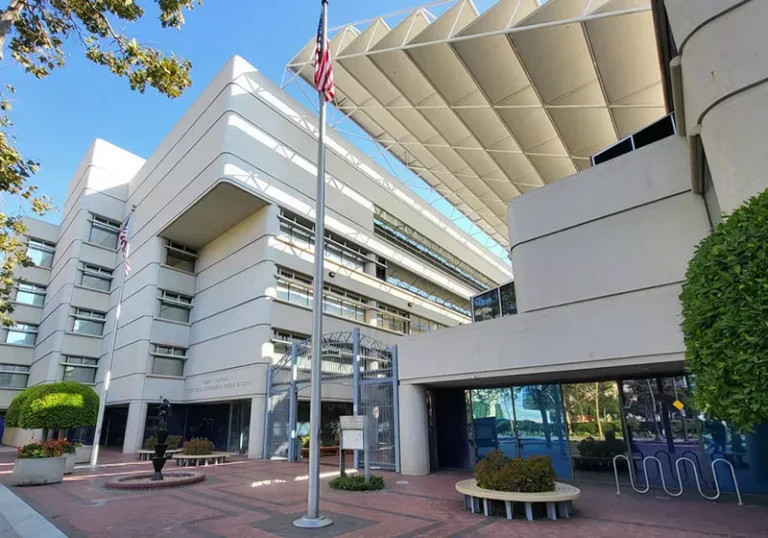
The Tunney Act, a law that gives judges authority to overturn corrupt merger settlements, has never been used to overturn a corrupt merger settlement. Amid an unprecedented wave of brazen corruption at Trump’s Justice Department, a San Jose federal court seems poised to assert itself, with potentially vast implications.
Regular readers of The Sling will already be familiar with the backstory, although I will offer a rosier outlook than my friend and Tunney Act expert Darren Bush. In January 2025, a mere ten days into Trump’s current term, the Justice Department filed a lawsuit to block the $14 billion merger of Hewlett Packard Enterprises (HPE) and Juniper, the second and third largest providers of wireless network services to large institutions like hospitals, universities, and government agencies.
What might have ushered in a bipartisan era of rigorous antitrust enforcement instead became mired in scandal. On the eve of trial, the Justice Department settled the case over the objections of career staff in the Antitrust Division who had sought stronger terms. That internal conflict led to the ouster of two senior antitrust enforcers. Various other lapses of enforcement, including the DOJ’s recent settlement with Live Nation, have cemented broader public sentiment that if you want to make a deal in D.C., all you have to do is pay the right person to pull the right levers.
This would all be more embarrassing for the Trump Administration if there were actual accountability for abandoning the rule of law. And I’ll get to that. But the novelty of the Trump Administration thus far is not the fact that it bends to corporate power—a bipartisan feature of administrations going back decades—but the brazenness of it all, which has the effect of rendering it banal. That banality is a dangerous predicament, fueling a broader sense of nihilism and helplessness.
A Judge pushes the limits of his authority to thwart corruption
Under these circumstances, the question of whether a federal court can stand up to Trump corruption, relying on a law adopted by Congress to compel it to do exactly that, is more than an isolated test of the adequacy of a single settlement. Rather, it is a critical test of the structural underpinnings of our democracy. More than preserving competition in the relevant market for enterprise-grade wireless local access network (WLAN) services, the Tunney Act review of the HPE-Juniper settlement will determine whether Trump has ongoing carte blanche to unilaterally eviscerate confidence in our government’s enforcement of the antitrust laws—or any law for that matter—free from the havoc wreaked by lobbyist interlopers on behalf of powerful corporations.
This past Monday, I drove myself to San Jose to watch the parties’ final arguments over the adequacy of their settlement agreement. The main legal debate over the Tunney Act is the extent to which the court is obligated to defer to the Justice Department’s judgment as to the adequacy of the settlement. Both the D.C. Circuit and Ninth Circuit Courts of Appeal have long hamstrung the courts’ oversight authority by adopting a policy of deference to prosecutorial discretion.
But as Henry Su, counsel for the Justice Department, began his argument, Judge Casey Pitts struck at the absurdity of restraining judicial authority under the guise of a statute designed to expand it:
“Is the standard under the Tunney Act that I have to conclude that something, no matter how inadequate it might be, is better than nothing? Is that the standard?”
The rhetorical implication is “no.” Even where courts have adopted a policy of deference, they have retained authority to reject settlements that make a “mockery” of the judicial system. But the question is a provocation as much as it is a source of frustration for the court. How can it be that the court would be unable to reject a settlement that is inadequate on its face? How can federal courts so casually reject agency regulations designed to rein in corporate abuse, while cowering under their own authority to curb corporate corruption?
Over the course of the next two hours, Judge Pitts posed additional questions that seemed to reveal disbelief that the proposed settlement was designed to restore, much less preserve, competition in the market. Moreover, Judge Pitts seemed at a loss to think of any merger consent decree that had adequately preserved competition in the relevant market. Of both the Justice Department and HPE, he asked:
“Can you think of a case where a merger was allowed on certain conditions, and the government looked back and said, ‘yeah that looks great, there’s competition in the market’?”
When the Justice Department failed to come up with one on the spot, Judge Pitts offered an example of a merger settlement that had not restored competition: the 2010 consent decree that paved the way for Live Nation’s acquisition of Ticketmaster, now being tried as an illegal monopolization case by the states in the Southern District of New York. And the Justice Department has again attempted to settle that case for meager behavioral restrictions and nominal divestitures. Just one week prior, Judge Subramanian called the circumstances surrounding the Justice Department’s attempted settlement of the matter “mind-boggling.”
Nor did it help HPE’s cause when its counsel offered the 2013 merger of US Airways and American Airlines as a merger settlement that had preserved competition. That settlement is widely, if not universally, condemned as a disaster for the airline industry. Further, it was the product of a similar flavor of political interference by then-Chicago Mayor and Obama acolyte Rahm Emanuel. At the time, the New York Times called the settlement “baffling.” Then-Attorney General for the State of Texas Tom Horne called it “a gross miscarriage of justice and an outrage that the case was dropped.” A 2016 report by ProPublica revealed that Emanuel’s letter on behalf of a cabal of Mayors was written by a lobbyist for the airlines, an unfortunate parallel to allegations that the settlement at issue in these Tunney Act proceedings was written entirely by HPE.
HPE fared little better when parrying against Judge Pitts’ indictment of the settlement. HPE’s lawyer boasted that the settlement required the divestiture of HPE’s “Instant On” business—“a full WLAN business, including contracts, customer relationships, and 100 employees. It’s a $30 million WLAN business.” Judge Pitts fired back, “But the overall business is $4.6 billion.” When HPE’s counsel characterized the mandatory licensure of its “Mist AI Ops” technology as giving up HPE’s “secret sauce,” again Judge Pitts pushed back: “But this is a license to something that will remain HPE’s property.”
It’s not hard to see the gears turning in Judge Pitts’ head, and it’s little reach to suggest that he wants to reject this settlement as inadequate on its face. That’s not a certainty, given that Judge Pitts still has his hands tied by the Ninth Circuit. But doing so would be a stinging indictment of a Justice Department that is exposed on multiple fronts, with little to show for all of its early-term chest-puffing.
“If there was ever a merger where the Tunney Act was meant to be useful, it is this one.”
The inadequacy of the settlement itself is to say nothing of the glaring allegations of corruption that tainted its process. Counsel for the State of Colorado, which has led a team of States intervening to protect the public interest, hammered those allegations. On June 5, 2025, HPE and Juniper met with enforcers at the Justice Department’s Antitrust Division to discuss a potential settlement, and the Antitrust Division rejected it. After that, the Antitrust Division was iced out of all settlement talks. “If they want to disagree with the Antitrust Division, that’s fine, but they went around everyone who knew anything about this case,” argued Arthur Biller on behalf of the State of Colorado.
Biller continued by detailing how HPE and Juniper even circumvented their own litigation counsel, Gibson Dunn and Freshfields, and hired lobbyists including Mike Davis, William Levi and Arthur Schwartz to pull political levers. When lawyers at the Antitrust Division rejected HPE’s initial proposed settlement, HPE went over their heads and wrote the settlement document itself. As Biller put it, “It’s not reasonable, principled decision-making. It is patronage, quite frankly.”
In doing so, a handful of lobbyists brought the entire Antitrust Division to its knees. “The influence Davis and Levi had over these peoples’ jobs was not theoretical,” Biller argued. “They got [former head of the Antitrust Division Abigail Slater] and two senior enforcers fired.”
“And when you combine those disputed facts, along with the egregious circumstances by which the settlement was reached, if there was ever a merger where the Tunney Act was meant to be useful, it is this one.”
At the close of the hearing, Judge Pitts took the matter under submission and indicated he’d issue a decision soon. If Judge Pitts rejects the settlement, as I predict he will, the Justice Department can negotiate a new, stronger settlement, proceed with litigating the case, or perhaps most likely, attempt to dismiss the case altogether. Doing so would leave the States on the hook, once again, to enforce the law amid rank abandonment by the federal government. By now, they’re getting pretty good at it.