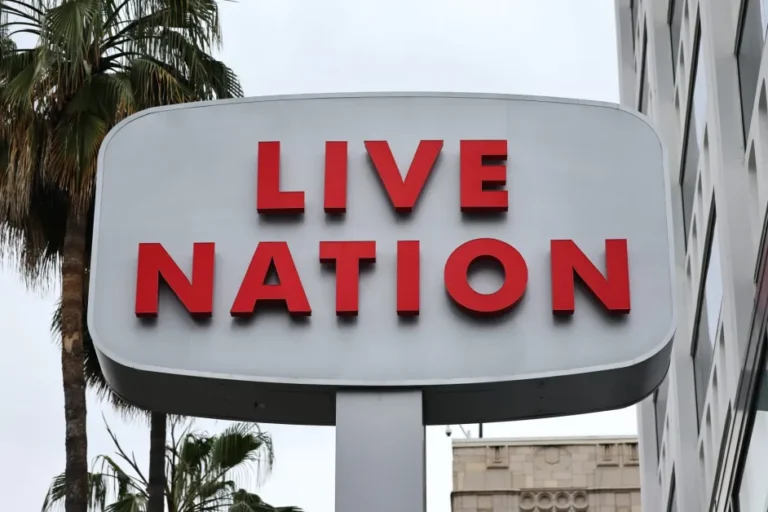
On Tuesday in a Manhattan court room, a federal jury confirmed what most American music fans, performers, or venue owners knew to be true: Live Nation and Ticketmaster illegally monopolized concert ticketing and promotion. But the lawyers from the Department of Justice’s antitrust division, who first brought the case, were yanked from the courtroom weeks before. In their place was a collection of 34 state attorneys general, Republican and Democrat alike, who saw the trial through to a landmark enforcement victory.
Over the coming two-plus years, and perhaps beyond, that scene may become a familiar one. For state enforcers, it marks a return to their once-key role in fighting monopoly power.
As important as the Live Nation verdict was for U.S. antimonopoly enforcement overall, it was an even bigger day for the state-level enforcement of our antitrust laws, which is now poised to become the most crucial layer in our federalist antitrust enforcement system. For decades an afterthought in most antitrust matters, the lackadaisical enforcement and outright corruption of the Trump administration has created a need, and opportunity, for state-level enforcement officials ready and willing to hold corporate power accountable.
“In the face of dwindling antitrust enforcement by the Trump Administration, this verdict shows just how far states can go to protect our residents from big corporations that are using their power to illegally raise prices and rip-off Americans,” California Attorney General Rob Bonta said after the verdict came in.
The states’ role in the Live Nation trial calls back to the long history of state enforcers leading the democratic fight against monopolization in America. Since the earliest days of the Republic, states have represented the leading edge in stopping monopolies simply because the pathway from the people to the statehouse is always far shorter than the distance between the public and Capitol Hill. When farmers, workers, and independent shopkeepers first faced abuse at the hands of concentrated corporate power and capital in the decades after the Civil War, they initially turned to their state representatives to take action.
Take action they did. Beginning with Iowa in 1888, 13 states passed antitrust laws before the passage of the federal Sherman Act in 1890, and even more states added anti-monopoly amendments to their constitutions. These pre-Sherman Act laws grew from previous state laws and policies aimed at preserving economic opportunity and a balance of economic power. Framed in a belief in personal liberty — that people should be free to pursue their lives as they wish unfettered by tyranny of any kind — these laws and constitutional amendments banned the tyranny of monopoly in plain language. As reflected in North Carolina’s constitution,: “monopolies are contrary to the genius of a free state” and must not be permitted.
Armed with these new laws against trusts and monopolization, states sued the major trusts dozens of times between the late 1880s and 1902. States filed six lawsuits before the passage of the Sherman Act and won all six, each time forcing a trust to forfeit their state franchise or, in some cases, breaking up the trusts altogether. The state of Ohio sued Standard Oil, and forced it out of business in Ohio, months before Congress passed the Sherman Act and two decades before the Supreme Court would force the trust to dissolve. State penalties made clear the severity of monopoly crimes; in North Carolina, organizing a trust or monopoly could land a person in prison for a decade, while in Iowa, monopolists could face fines of up to 20 percent of a company’s capital stock.
But in the modern era of antitrust, since the end of World War I and certainly since the reinvention of antitrust enforcement during the New Deal, states have been largely sidelined as the feds actively enforced the law. State enforcement seemed so unnecessary by the 1960s, pundits began asking whether it was worth having state antitrust laws in the first place. When states did challenge monopolies and bad mergers, it was often alongside their federal counterparts, who took the lead in investigations and in court.
Then, over the past half century, antitrust enforcement transformed, as did the role states played in policing the economy. During the Reagan administration — the last time federal antitrust enforcement sunk to such embarrassing lows — state attorneys general organized an antitrust task force under the National Association of Attorneys General, where they coordinated multi-state antitrust actions to stop anticompetitive mergers and monopolies. Years later, when the federal government chose to settle the Microsoft monopolization case, state enforcers organized themselves to enforce that settlement for years after the federal government absconded.
But there’s never been a moment in antitrust history quite like this one. The DOJ higher-ups appear not only unwilling to seriously enforce the law — they have allowed Trump-connected corporate lobbyists to capture and corrupt antitrust law enforcement, doing untold damage to the economy and undermining the work of the agency’s dedicated career investigators and prosecutors, who are now fleeing the antitrust division in droves.
This is also a very different moment for state enforcers. Thirty years ago, most state officials had been captured by the same neoliberal, consumer-welfare-based capitulation to corporate concentration that had overwhelmed the federal agencies. Not so today. The growing antimonopoly movement’s dedication to checking corporate power has found a home at the state level, often in ways that sidestep partisan politics and instead rekindle the spirit of those first state monopoly laws and trustbusting actions.
The Biden Administration’s antitrust enforcers, Jonathan Katner at the DOJ and Lina Khan at the Federal Trade Commission, deserve credit here. They brought many of the monopolization cases that are now winding their way to trial, and beyond that, they helped transform the narrative around what’s possible when it comes to government policing corporate abuses. Consumer welfare is no longer the lodestar: Antitrust law was used to protect authors against the threat of a book publishing merger, and to protect artists against Live Nation. Over the past five years, many state enforcers I’ve talked to embraced their role in fighting monopolies and mergers, but said they were hesitant to lead on antitrust because they believed the federal agencies under Khan and Kanter had things under control. They do not feel the same about the administration today.
That’s why state officials are now on the front lines of major fights against concentration. Guiding the Live Nation trial to a liability verdict after the feds abandoned the case is monumental. But eight states are also challenging the $6.2 billion Nexstar/Tenga television merger after the DOJ declined to get involved, and California Attorney General Rob Bonta, and potentially others, seems poised to fight the Paramount/Warner Bros merger regardless of what the feds decide to do.
If states are going to succeed, they’ll need the right tools to do it. Lawmakers in a dozen or more states have introduced significant updates to their antitrust laws over the past several years, including the COMPETE Act in California, which would create a streamlined and enforceable anti-monopoly law in a state with the fourth-largest economy in the world. State attorneys general need more money, too; many AGs offices around the country have just one lawyer working half-time on antitrust issues. That must change if states are going to drive antimonopoly enforcement. But driving they are — today, as they did more than a century ago. Live Nation and its cadre of well-paid lawyers can confirm: The states are ready.